


Modern supply chains demand nothing less than surgical precision, and racking systems for warehouse operations have become the invisible architecture upon which entire economies depend. Yet for all their foundational importance, these towering steel structures remain curiously absent from conversations about industrial innovation—a silence that seems almost deliberately orchestrated by those who profit most from our collective ignorance about storage logistics.
Understanding the Warehouse Storage Revolution
The landscape of industrial storage has undergone a profound transformation that extends far beyond mere shelving. Warehouse storage solutions now represent sophisticated ecosystems designed to maximise vertical space whilst accommodating increasingly complex inventory demands. These systems have evolved from simple static structures into dynamic, technology-integrated platforms that respond to real-time operational requirements.
In Singapore’s constrained geographical environment, this evolution carries particular urgency. As of the third quarter of 2023, there was a planned supply of 885 thousand square meters of warehouse space in the pipeline, representing both opportunity and challenge for businesses seeking efficient storage configurations. The pressure to optimise every available cubic metre has transformed warehouse racking from an afterthought into a strategic imperative.
Industrial shelving systems have become the backbone of this transformation, offering modular solutions that adapt to diverse inventory profiles. From pharmaceutical cold storage requiring temperature-controlled environments to electronics manufacturing demanding anti-static configurations, contemporary storage frameworks must accommodate an increasingly specialised range of operational demands.
The Economics of Vertical Efficiency
Singapore’s position as a global logistics hub creates unique pressures that illuminate the broader economics of storage optimisation. The Singapore logistics market size reached US$ 23.4 Billion in 2023 and grow at a CAGR of 4.60% to reach US$ 35.0 Billion by 2032, whilst trade amounts to 173 percent of GDP, one of the highest ratios in the world. These figures reveal the extraordinary economic weight resting upon storage infrastructure.
The imperative for vertical storage systems becomes clear when considering Singapore’s land constraints. Land scarcity in Singapore is pushing the logistics industry to find innovative means of building and managing industrial properties and warehouses. One solution is multi-story warehouses. This spatial pressure has catalysed innovation in pallet racking solutions that maximise height utilisation whilst maintaining accessibility and safety standards.
Key Components of Modern Storage Architecture
Effective warehouse organisation systems comprise several interconnected elements:
- Selective pallet racking: Providing direct access to every pallet whilst maintaining structural efficiency
- Drive-in/drive-through systems: Maximising density for high-volume, low-SKU inventory profiles
- Push-back racking: Combining density with selectivity through gravity-fed storage lanes
- Cantilever systems: Accommodating irregular or oversized items that standard pallet configurations cannot handle
- Mezzanine flooring: Creating additional operational levels within existing vertical space
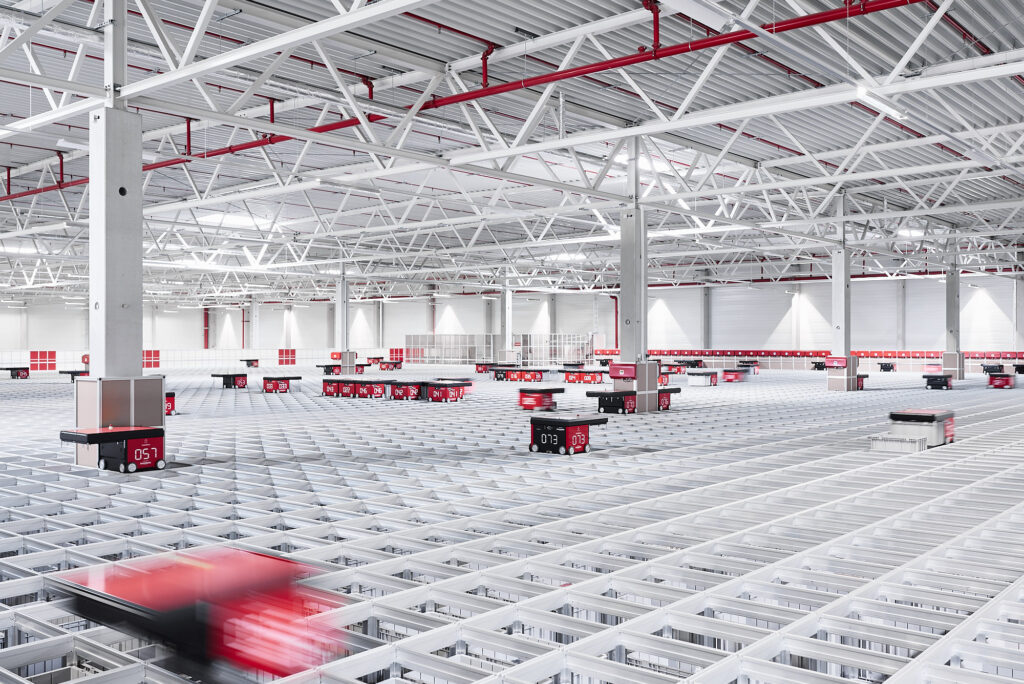
- Automated storage and retrieval systems: Integrating robotics with traditional racking for enhanced efficiency
Each component serves specific operational requirements whilst contributing to overall system performance. The selection and configuration of these elements determine not merely storage capacity but operational velocity, accuracy, and long-term scalability.
Singapore’s Strategic Storage Landscape
The city-state’s unique position offers instructive insights into contemporary storage challenges. Singapore’s port is the second busiest in the world in cargo, behind Shanghai. Last year, it handled 30.9 million TEUs, whilst Singapore has more than 80 pharmaceutical and medical device manufacturing plants. This diversity of industrial activity demands equally diverse storage solutions.
Recent market developments signal significant changes ahead. There is a deluge of supply (0.85 mil sqm) coming on stream in 2025, the highest since 2017 (0.96 mil sqm), suggesting both opportunity and increased competition for storage space. Third-party logistics (3PL) providers hold the largest share (70%), followed by warehousing and storage (20%), indicating the dominance of specialised logistics operators in managing complex storage requirements.
Innovation Through Constraint
The most compelling aspect of Singapore’s storage evolution lies in how geographical limitations have catalysed technological advancement. Electronics & semiconductors lead the demand (30%), followed by chemicals & pharmaceuticals (25%) and e-commerce (20%), each sector requiring distinct storage protocols that push conventional racking systems beyond traditional boundaries.
This sectoral diversity necessitates flexible racking solutions capable of accommodating varying load capacities, environmental requirements, and access frequencies. The result has been rapid innovation in modular storage systems that can be reconfigured as operational demands evolve—a crucial capability in Singapore’s fast-changing industrial landscape.
Beyond Storage: The Hidden Infrastructure of Global Commerce
What emerges from examining Singapore’s storage revolution is a broader understanding of how warehouse infrastructure shapes economic possibility. These systems represent more than mere storage; they constitute the hidden circulatory system of global commerce, determining which goods move where and at what velocity.
The implications extend far beyond operational efficiency. Storage configurations influence labour requirements, energy consumption, and even the types of businesses that can viably operate within specific geographical constraints. In Singapore’s case, sophisticated storage solutions have enabled the city-state to maintain its position as a regional logistics hub despite severe land limitations.
Future Trajectories
Looking ahead, the integration of artificial intelligence, Internet of Things sensors, and automated handling systems promises to transform storage frameworks into responsive, self-optimising networks. These developments will likely accelerate the obsolescence of static storage models whilst creating new possibilities for space utilisation that current frameworks cannot accommodate.
The warehouse of tomorrow will function less as a static repository and more as a dynamic node in interconnected supply networks—a transformation that begins with thoughtful consideration of today’s racking choices. Those who understand this evolution will find themselves positioned to capitalise on opportunities that remain invisible to competitors still thinking in terms of simple storage.
The choice of racking systems for warehouse operations today determines not merely current capacity but future operational possibilities—a reality that transforms storage selection from tactical decision into strategic foundation for industrial success.

