

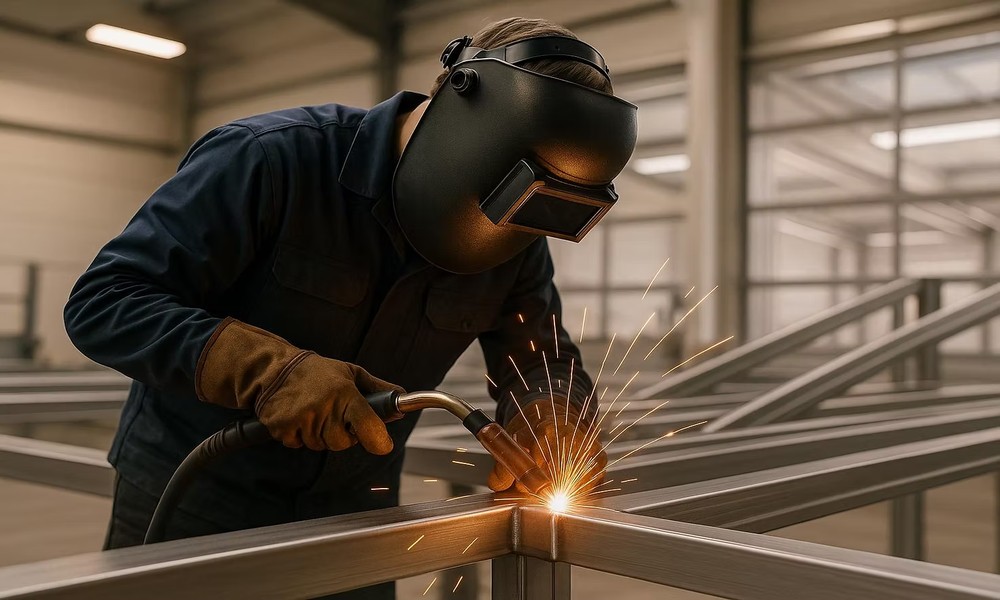

In many UK industries, the strength and reliability of fabricated joints are non-negotiable. From towering structures to critical pipelines, the integrity of these connections depends on a foundational process. This process validates that the methods used to join materials can consistently produce sound results.
This guide offers a clear overview of this critical validation step. It is essential for ensuring mechanical properties, quality levels, and service performance meet strict benchmarks. Organisations across construction, manufacturing, and energy rely on it for safety and consistency.
The core activity involves creating sample welds under a documented set of conditions. These samples then undergo rigorous inspection and evaluation. The goal is to verify that the outlined methods are capable of producing acceptable outcomes every time.
Understanding these requirements is vital for meeting contractual and regulatory codes. It provides documented evidence that operations align with specified industry standards. Expert support, from providers like NWQS, helps companies navigate this framework efficiently.
Proper validation minimises operational variability and defect risk. It forms the bedrock of a robust quality assurance system, supporting compliance and project success across the UK.
Key Takeaways
- This validation is a critical step to ensure joined components meet required mechanical and performance standards.
- It underpins safety, consistency, and regulatory compliance across major UK industrial sectors.
- The process involves making test samples under controlled conditions followed by detailed inspection.
- A clear understanding helps organisations fulfil contractual obligations and adhere to industry codes.
- Successful completion minimises variability, reduces defect risk, and provides essential documented evidence.
- The framework covers both the approval of methods and the assessment of individual operator performance.
Introduction to Welding Procedure Qualification Testing
In UK fabrication, consistent quality is not left to chance. It is proven through rigorous pre-production trials. This formal validation is known as Welding Procedure Qualification Testing.
Its core purpose is to demonstrate that a specified method can reliably produce joints. These joints must meet strict mechanical, quality, and performance benchmarks.
Definition and Importance
This activity involves creating sample welds under tightly controlled conditions. These samples are then inspected and tested to destruction. The goal is to gather conclusive evidence that the method works.
The proven parameters are captured in a Welding Procedure Specification (WPS). This is a mandatory, controlled document. It provides welders with exact instructions for a given scope of work.
Adherence to an approved WPS minimises variability on the shop floor. It directly reduces the risk of defects and rework. This validation is a cornerstone of technical capability and risk management.
Role in Ensuring Quality and Compliance
The process provides documented proof that operations align with industry codes. This evidence is often a contractual requirement for projects across energy, construction, and manufacturing.
It ensures all personnel follow a single, proven set of instructions. This standardisation is vital for achieving uniform results, batch after batch. Ultimately, it underpins safety, supports quality assurance systems, and facilitates acceptance by inspectors.
Standards and Regulatory Compliance
The integrity of industrial fabrication in the UK is underpinned by a network of internationally recognised standards. These documents provide the definitive rules and codes that govern how joints are made. Adherence to them is a fundamental part of regulatory compliance and project acceptance.
ISO 15614, ISO 9606 and Other Relevant Standards
Key documents form the backbone of this framework. ISO 15614 is the primary British Standard for qualifying joining methods for metallic materials. It covers production, repair, and build-up work.
Complementing this, ISO 9606 sets out the requirements for approving operators who perform fusion work. Globally, codes like the ASME Boiler and Pressure Vessel Code establish comprehensive rules for pressure equipment.
Understanding Procedure Approval and Testing Requirements
Procedure approval is not a suggestion but a mandatory step. A method must be developed in strict accordance with the applicable codes. It then requires samples to be made, inspected, and evaluated to prove its capability.
This formal validation provides the evidence needed for client and inspector sign-off. Understanding each standard’s specific requirements lets companies choose the right qualification path.
Ensuring Safety and Consistency in Welding
Following these recognised standards is the best way to ensure safety and consistent results. They detail acceptable parameters for materials, joints, and methods. This protects personnel and ensures structural reliability.
Ultimately, successful procedure approval under frameworks like ISO 15614 and ISO 9606 demonstrates due diligence. It streamines project approval and builds trust in the final product’s quality.
Welding Procedure Qualification Testing: Procedures, Approval, and Best Practices
Proving a method’s capability requires documented evidence from both process trials and personnel assessment. This dual validation is captured in specific, controlled records.
Overview of the Procedure Qualification Record (PQR)
A Procedure Qualification Record (PQR) is created by making a sample under strict conditions. All key parameters are documented during this trial.
The sample undergoes rigorous checks. These include visual checks, radiographic examination, tensile, and bend tests. Successful results prove the procedure specification works.
Welder Performance Qualification and Certification
Individual welder qualification confirms a person’s skill. Each operator must make a test piece using the approved WPS.
This qualification test checks their technique and control. Only personnel with valid certifications can work on production jobs.
| Document | Primary Purpose | Key Contents |
|---|---|---|
| Procedure Qualification Record (PQR) | To prove a method produces sound joints. | Actual parameters used, test results, and approval range. |
| Welding Procedure Specification (WPS) | To give instructions for production work. | Detailed parameters for welders to follow. |
| Welder Performance Qualification (WPQ) | To certify an individual’s ability. | Welder identity, test details, and qualified scope. |
Best practices involve keeping all records current. Personnel must only work within their certified ranges. Regular re-validation is often required by standards.
Welding Equipment, Materials and Testing Methods
Achieving a sound, reliable connection depends on more than just skill. It requires the right gear, consumables, and methods to verify the work. The Welding Procedure Specification (WPS) provides the essential instructions for all these elements.
This document details the base material and filler metal, joint design, and the specific welding process. It also sets the required parameters, like heat input and operating range.
Inspection Techniques and Non-Destructive Testing (NDT)
Verifying that the WPS is followed is crucial. Non-Destructive Testing methods check for flaws without damaging the component.
These inspection techniques confirm a weld meets quality standards. They find hidden defects that could compromise performance in service.
| NDT Method | How It Works | Common Use |
|---|---|---|
| Radiographic Testing (RT) | Uses X-rays or gamma rays to create an image of internal features. | Detecting internal porosity, cracks, and inclusions. |
| Ultrasonic Testing (UT) | High-frequency sound waves reflect off flaws to measure their size and location. | Finding subsurface defects and measuring material thickness. |
| Magnetic Particle Inspection (MPI) | Magnetises the part; iron particles cluster at surface-breaking flaws. | Identifying cracks and defects on ferromagnetic material surfaces. |
| Dye Penetrant Inspection (DPI) | A coloured dye seeps into surface defects, then a developer makes them visible. | Finding surface-breaking flaws on non-porous materials. |
Optimising Weld Quality Through Proper Equipment and Materials
Consistent results demand well-maintained equipment. Regular calibration ensures machines deliver the correct electrical parameters every time.
Correct storage of filler material is also vital. Moisture control prevents defects during the production phase.
Ultimately, strict adherence to the qualified WPS instructions is the best way to ensure every weld is sound. This disciplined approach minimises variability across all production activities.
Expert Support and Services: Consultation with NWQS Ltd and NWQS
Professional consultation services bridge the gap between theoretical standards and practical application. Specialist providers like NWQS offer vital expertise to navigate complex validation requirements.
Their support ensures organisations meet strict industry codes efficiently. This minimises project delays while guaranteeing full compliance.
Tailored Testing and Certification Services
NWQS Ltd delivers comprehensive solutions tailored to specific client needs. These include method development, performance trials, and independent witnessing.
All activities follow current standards like ISO 15614 and ISO 9606. Experienced personnel conduct thorough assessments and provide detailed reports.
| Service Type | Core Activity | Key Outcome |
|---|---|---|
| Procedure Development | Creating and reviewing method specifications. | A robust, code-compliant WPS for production. |
| Performance Testing | Executing and witnessing sample trials. | Validated PQR and operator certifications. |
| Compliance Support | Managing documentation and requalification. | Ongoing adherence to regulatory updates. |
Client-Centred Solutions and Ongoing Compliance Support
Expert consultation focuses on long-term success. Services help maintain current qualifications and adapt to changing project demands.
All documentation is prepared to the highest standard. Certificates gain universal acceptance from major insurers and notified bodies.
This end-to-end support covers the complete qualification lifecycle. It provides peace of mind for clients across diverse UK industries.
Conclusion
Ultimately, the validation of fabrication methods stands as a critical pillar for industrial integrity across the UK. This formal approval process is a fundamental requirement. It ensures all joining work meets strict benchmarks for quality, safety, and performance.
The system provides documented evidence that methods can produce acceptable results consistently. This supports regulatory compliance and fulfils contractual obligations. Understanding the full range of requirements allows organisations to maintain high standards.
Proper qualification minimises the risk of weld defects and reduces costly rework. It guarantees components perform reliably throughout their service life. The variety of testing methods and standards offers flexibility for different materials and applications.
Investing in comprehensive welding procedure qualification delivers long-term advantages. These include a stronger reputation, improved project outcomes, and reduced liability. Companies that prioritise this demonstrate a clear commitment to excellence and secure a competitive edge.
FAQ
What is a Procedure Qualification Record (PQR)?
Which standards govern approval testing in the UK?
How does welder certification differ from procedure approval?
What role does Non-Destructive Testing (NDT) play in the process?
Why is material specification so important for qualification?
What support can a specialist firm like NWQS Ltd provide?

