

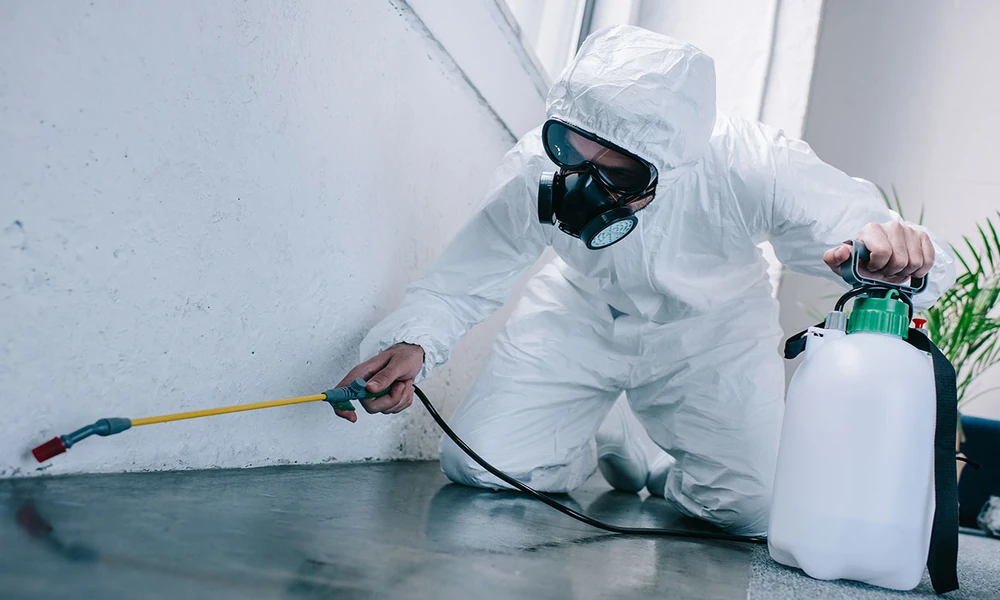

Finding pest control in Singapore is easy. Working out which provider is genuinely equipped to solve the problem is harder.
A cockroach sighting in an HDB kitchen, rat droppings in a storeroom and termite damage inside a landed property may all lead someone to search for the same service, but they are very different pest problems. Each requires its own inspection method, control strategy and follow-up.
That distinction matters in Singapore, where warm temperatures, high humidity, dense housing, shared drainage systems and year-round food availability create favourable conditions for many urban pests.
The National Environment Agency also regulates professional vector-control work. Companies providing regulated vector-control services must be registered as Vector Control Operators, while the employees carrying out the work must hold the applicable Vector Control Technician licence or Vector Control Worker certification.
At the same time, Singapore Standard SS 721:2025 has introduced a broader benchmark for professional pest-management services based on Integrated Pest Management, or IPM. Instead of relying mainly on chemical application, the framework emphasises prevention, risk assessment, appropriate combinations of control methods and continuous monitoring.
For homeowners and businesses, that offers a much better way to judge a pest-control provider.
A reliable company should be able to explain what pest is present, where the activity is coming from, why a particular treatment is suitable and how it will know whether the infestation is actually improving.
Why Pest Control Requires a Different Approach in Singapore
Singapore’s tropical environment allows many pests to remain active throughout the year, although activity levels can still change with rainfall, temperature and local conditions.
Mosquitoes can breed in small collections of stagnant water. Cockroaches thrive where food, moisture and concealed harbourages are readily available. Rodents can travel through drains, ceilings, refuse areas and gaps around building services. Termites may remain hidden within soil-connected structures or timber for extended periods.
This means pest management cannot rely on seasonality alone.
A problem may also extend beyond one individual property.
In HDB blocks and condominiums, pests can move through shared pipes, drains, rubbish systems, landscaping and service areas. A homeowner may clean a unit thoroughly and still experience recurring activity if the source sits elsewhere in the building.
Commercial sites face different pressures. Restaurants have food preparation, waste and drains. Warehouses receive goods from multiple sources. Offices have pantries, false ceilings and shared infrastructure.
The solution therefore needs to fit the property as well as the pest.
Reliable Pest Control Begins With Inspection
The most useful first step is not spraying. It is establishing what is actually happening.
A competent inspection should identify the pest, signs of activity, likely harbourage or nesting locations and environmental conditions contributing to the problem.
With cockroaches, this may involve inspecting drains, cabinets, appliances, food-storage areas and concealed gaps.
Rodent work may include searching for droppings, gnawing, grease marks, damaged packaging and access openings.
Termite inspections can involve checking for mud tubes, timber damage, discarded wings and concealed structural activity.
Bed bug investigations generally focus on mattresses, bed frames, furniture seams and other areas close to where people sleep.
An inspection also helps prevent misdiagnosis.
Not every bite is caused by bed bugs. Not every damaged piece of wood contains active termites. An isolated cockroach sighting does not necessarily mean an established infestation.
The better the diagnosis, the easier it becomes to choose a proportionate treatment.
Integrated Pest Management: Moving Beyond Routine Spraying
SS 721:2025 is important because it formalises a more comprehensive approach to pest management in Singapore.
NEA describes its IPM principles as prevention first, objective risk assessment, combining physical, biological and chemical controls where appropriate, reducing unnecessary chemical dependency and monitoring results continuously. The framework applies to pests including rats, cockroaches, mosquitoes, fleas, flies, biting midges, bed bugs and termites.
In practical terms, that changes what a good pest-control service should look like.
A cockroach programme might include baiting, sanitation improvements and closing harbourage gaps.
Rodent management can combine trapping or baiting with proofing, waste control and monitoring.
Mosquito control begins with finding and removing breeding habitats rather than defaulting to fogging.
Termite management depends on the termite species and where activity has been detected.
This does not mean pesticides are unnecessary.
It means chemical application should be one tool within a wider programme rather than the programme itself.
Cockroaches: Treat the Harbourage, Not Just the Sighting
Cockroaches are common around kitchens, drains, refuse areas, cupboards and warm equipment.
Repeated sightings are more informative than a single insect entering from outside.
Other signs can include droppings, egg cases and concentrations of activity around food, water and sheltered areas. Heavier infestations may also produce a noticeable odour.
One reason DIY aerosol sprays often disappoint is that they mainly affect exposed insects.
Cockroaches can remain concealed behind appliances, inside cabinets, around pipe openings or deep within structural gaps.
A professional treatment may therefore rely on targeted gel baiting, residual applications in suitable areas and monitoring, together with recommendations for improving sanitation and eliminating harbourages.
The environmental side matters.
If grease, food residue or leaking water remains readily available, the property continues to provide the resources cockroaches need even after treatment.
For F&B businesses in particular, repeated activity should trigger a review of cleaning, drainage, food storage and refuse management as well as pest-control methods.
Mosquito Control: Source Reduction Comes First
Mosquito management is one of the clearest examples of why visible treatment can be misleading.
Fogging creates an obvious cloud of insecticide, but it does not remove the stagnant water producing the next generation of mosquitoes.
NEA states that the most effective way to control mosquito populations is to prevent breeding. Potential habitats include discarded containers, water-storage containers, choked drains, roof gutters, puddles and infrequently used gully traps.
Where breeding locations cannot be removed permanently, NEA advises engaging a competent pest-control operator to inspect and treat them appropriately.
Fogging still has a role, particularly where adult mosquito numbers or mosquito-borne disease transmission justify rapid intervention.
However, NEA explicitly states that fogging should not be relied upon as the main mosquito-control method and warns that excessive use may contribute to insecticide resistance and affect non-target organisms.
For property managers, this means a mosquito programme should answer two separate questions.
Where are mosquitoes breeding?
And where does adult mosquito activity require control?
If the programme answers only the second question, it is incomplete.
Rodent Control: Trapping Alone Is Rarely Enough
Rodents are another pest where visible removal can obscure the root problem.
Trapping one rat does not explain how it entered the property or what attracted it there.
Warning signs include droppings, gnawed food packaging, damaged wiring, grease marks, noises in ceilings or wall voids and repeated sightings.
A complete rodent programme generally looks at food, water, shelter and access.
Rubbish should be properly contained. Stored food needs protection. Openings around pipes, doors or external walls may require proofing. Clutter that provides hiding places may need to be reduced.
Monitoring can also become useful in larger or more difficult sites.
For example, Singapore pest-management company Aardwolf Pestkare publishes a rodent-control process that includes inspection, control, monitoring and reporting. The company also describes using motion-activated wireless camera technology in selected rodent programmes to record activity in concealed areas and alert technicians.
That technology should not be treated as a guarantee of a particular result.
Its value lies in giving technicians more information about where and when rodents are moving so that the control programme can be adjusted accordingly.
Termites Need Species-Specific Treatment
Termites deserve a separate approach because they are primarily a property-damage concern rather than a public-health vector.
They can also remain hidden.
Possible warning signs include mud shelter tubes, hollow or damaged timber, discarded wings and unexplained deterioration around cabinetry, skirting boards or other wooden elements.
The termite species matters.
Subterranean termites maintain colonies associated with soil and can enter buildings through concealed routes. Drywood termites live inside timber and therefore require different treatment strategies.
Treatment for subterranean termites may include baiting, soil treatment, localised treatment or a combination depending on the infestation and building.
Diagnostic tools can sometimes assist.
Aardwolf Pestkare, for example, currently describes using TermiCam thermal imaging to help locate suspected subterranean termite activity and offers treatment routes including baiting, soil treatment and spot treatment.
This is one provider’s approach, not a universal industry requirement.
The more important point is that the recommended treatment should follow the termite species and inspection findings rather than beginning with one predetermined package.
Bed Bugs: Bites Are Not Enough to Diagnose an Infestation
Bed bugs create understandable anxiety, particularly after travel or when used furniture has recently entered a home.
But skin reactions alone do not prove that bed bugs are present.
NEA notes that bed bugs tend to hide around sleeping areas, behind wall coverings, around electrical outlets, mattresses, bed frames and nearby furniture. Detection can involve visual inspection and surveillance traps.
Bed bugs are also not known to transmit diseases to humans, although their bites can cause itching, discomfort and allergic reactions in some people.
Treatment often requires several methods.
NEA identifies options including vacuuming, hot laundering, steam or heat treatment, elimination of harbourages and insecticides.
This is why a generic promise of one spray eliminating every bed bug problem should be viewed cautiously.
Preparation, treatment method and follow-up depend on how widespread the infestation is.
Warning Signs That Justify Professional Assessment
Not every insect requires a service call, but recurring or unexplained activity deserves attention.
Signs worth investigating include:
-
persistent cockroach sightings, droppings or egg cases;
-
rodent droppings, gnawing or noises in concealed areas;
-
mud tubes or unexplained timber damage associated with suspected termites;
-
confirmed or suspected bed bug evidence around sleeping areas;
-
repeated mosquito breeding in water that cannot easily be removed;
-
pest activity affecting food preparation or business operations.
The key word is persistent.
A small ant trail around an exposed food source may disappear once the food is removed and the area is cleaned.
A single outdoor cockroach entering through an open door is not automatically an infestation.
Professional help becomes more useful when the activity keeps returning, the pest is difficult to identify or the consequences of getting the diagnosis wrong are significant.
NEA Registration and Licensing: What Customers Should Actually Check
The original claim that every “legitimate pest-control provider must hold an NEA licence” is too broad.
The regulatory framework is more precise.
Only companies registered with NEA as Vector Control Operators can be engaged to undertake regulated vector-control work. Employees carrying out that work must be licensed as Vector Control Technicians or certified as Vector Control Workers.
That terminology matters because it helps consumers ask the right question.
Instead of asking only, “Are you NEA licensed?”, ask whether the company holds current VCO registration for the work being proposed and whether the personnel carrying it out meet the applicable requirements.
NEA also advises service buyers to consider a company’s trained manpower, staff experience, technology or equipment and past track record.
Credentials are therefore the starting point rather than the entire decision.
Pest-Control Reports Are More Important Than They Look
A written service report is one of the clearest signs of accountability.
For regulated vector-control work, NEA expects operators to record inspections, findings and treatments and to provide reports and recommendations at agreed intervals.
A useful report should tell the customer more than “service completed.”
It should identify the areas inspected, evidence observed, treatment carried out and recommendations for reducing risk.
Where monitoring devices are part of the programme, subsequent reports should also help show whether activity is increasing or decreasing.
For commercial properties, this becomes particularly valuable.
Trend data can help a facilities manager understand whether a recurring problem is associated with a particular room, drainage system, loading area, refuse point or operating procedure.
One example of this more analytical model is Aardwolf Pestkare’s technical-services programme. Its published process includes pest identification, investigation and pest trending analysis, where monitoring-station counts are charted so irregular activity can trigger corrective action.
The principle is useful regardless of provider: pest-control reporting should help people make decisions, not simply prove that a technician visited.
Pest Control for HDB Flats
HDB residents face a particular challenge because pests do not necessarily respect unit boundaries.
Cockroaches and rodents may move through common pipes, refuse systems, drains or shared service spaces.
That means repeated treatment inside one home may have limited effect when activity originates elsewhere in the building.
Inside the flat, residents can still reduce risk through good food storage, cleaning, moisture control and sealing obvious gaps.
Where pest activity appears linked to common property, reporting the issue to the relevant management body can be as important as treating the unit itself.
Mosquito prevention also begins inside the home.
Regular checks for stagnant water in containers, plant-related items and other water-holding locations remain part of Singapore’s broader dengue-prevention effort.
Condominiums Require Coordination With Management
Condominium residents face many of the same shared-building issues.
Pests may move through common drains, landscaping, basement areas, refuse facilities or service risers.
NEA’s mosquito guidance for condominium estates specifically highlights areas such as open and closed drains, gully traps, plant boxes, pots, ponds, fountains, air-conditioner trays, rooftops and water tanks as locations that require monitoring.
If a resident repeatedly encounters pest activity that appears linked to common property, informing the managing agent allows the issue to be considered at estate level rather than solely within one unit.
Landed Homes Have Different Exposure
Landed properties generally have more direct contact with outdoor conditions.
Gardens, roof gutters, drains, soil, outdoor storage and timber structures can create additional opportunities for mosquitoes, rodents and termites.
This does not mean landed homeowners automatically need frequent chemical application.
Regular inspections, water management, cleaning and pest-proofing can reduce risk considerably.
Termites are one area where preventive awareness is particularly useful because signs may remain concealed until damage has progressed.
If suspicious mud tubes or timber deterioration appears, inspection is generally more useful than spraying the visible area and assuming the problem has been solved.
Commercial Pest Management Is a Different Service
Pest control for a restaurant, warehouse, factory or office is not simply residential servicing performed more often.
Commercial sites have more complex operating conditions and usually need better documentation.
Restaurants need to manage food waste, drains, grease, stored ingredients and deliveries.
Warehouses face pallets, loading bays, stored stock and large perimeters.
Factories may have production zones that require different controls from offices or pantry areas.
A structured commercial programme may include routine inspection, monitoring, treatment records, trend analysis and corrective recommendations.
The business also has responsibilities.
A contractor cannot permanently solve a rat problem while damaged doors remain open, or eliminate cockroaches where inaccessible grease and food residue remain unchanged.
Good commercial pest management therefore depends on cooperation between the provider and the site’s facilities, hygiene or operations team.
Pest-Control Pricing in Singapore: Compare Scope, Not Just Numbers
There is no useful single market price for pest control in Singapore.
Treatment costs vary because pest problems vary.
A small ant problem in a condominium is not comparable with termite management for a landed property.
Bed bug treatment can depend on how many rooms are affected.
Rodent work may require monitoring, trapping and proofing.
Commercial programmes can include multiple pest categories, scheduled servicing and documentation.
Typical factors affecting a quotation include:
-
the pest involved;
-
property size and type;
-
severity and spread of activity;
-
accessibility of affected areas;
-
treatment method;
-
number of visits;
-
monitoring and reporting requirements;
-
corrective or proofing work.
This is also why claims such as “every reputable provider offers a free inspection” should be avoided.
Some providers may offer complimentary assessments, while others charge for specialist inspection or diagnostic work.
The more useful comparison is the written scope.
A cheaper quote may exclude follow-up that another provider includes. One company may quote only the visible room while another includes surrounding risk areas.
Customers should understand what each figure actually buys before comparing totals.
Be Careful With “Eco-Friendly,” “Non-Toxic” and “Chemical-Free”
These phrases are attractive, particularly for households with children or pets, but they can be misleading when they are not explained.
IPM does encourage reduced chemical dependency and targeted applications.
Non-chemical measures such as proofing, traps, heat, sanitation and removing pest harbourages can also play important roles.
But some infestations still require pesticide treatment.
The correct question is therefore not simply whether a service is “chemical-free.”
Ask which product or method will be used, why it is suitable and what precautions apply.
During mosquito fogging or indoor misting, for example, NEA provides specific precautions for vulnerable occupants, pets, aquariums, food and utensils.
A provider that gives precise safety instructions is more useful than one relying on broad assurances that everything is “completely safe.”
How to Evaluate a Pest Control Provider
A practical provider comparison can be built around seven questions.
1. Does the Company Meet Applicable NEA Requirements?
For regulated vector-control work, check current VCO registration and the relevant personnel credentials.
Do not rely solely on an old certificate displayed online.
2. Did the Provider Inspect Before Recommending Treatment?
Ask what evidence was found and where.
A credible recommendation should connect directly to inspection findings.
3. Does the Treatment Fit the Pest?
Cockroach baiting, termite baiting, rodent proofing and mosquito source reduction serve completely different purposes.
Be wary of a provider recommending the same procedure for every problem.
4. Is There a Clear Written Scope?
The quotation should explain which pests and areas are covered, the number of visits, monitoring arrangements and major exclusions.
5. Will You Receive Useful Reporting?
Reports matter most where infestations recur or where a commercial programme is being managed over time.
6. Are Safety Instructions Specific?
Ask about treatment products, preparation, re-entry, pets and food protection where relevant.
7. Does the Provider Have Relevant Experience?
Company age alone does not establish quality, but experience with the particular pest and property type is useful context.
For instance, Aardwolf Pestkare was established in Singapore in 1997 and publishes residential and commercial pest-management services together with specialist identification, investigation, trending analysis and programme reviews.
That does not remove the need to compare the proposed treatment with other providers. It simply gives buyers concrete information beyond generic advertising claims.
Prevention Is Part of Pest Control
Professional treatment works better when occupiers address the conditions attracting pests.
Food should be stored properly and spills cleaned promptly.
Rubbish needs to be contained.
Leaks and excessive moisture should be corrected.
Clutter can be reduced to remove hiding places.
Obvious gaps around doors, pipes and service openings should be addressed where practical.
For mosquitoes, stagnant water should be removed regularly. NEA continues to emphasise source reduction as the most effective way to control mosquito populations.
These steps may sound basic, but they directly influence the success of professional treatment.
Repeated chemical application cannot indefinitely compensate for abundant food, water, harbourage and open entry routes.
Measuring Whether Pest Control Is Actually Working
One of the most useful ideas in SS 721:2025 is the shift towards performance-based pest management.
That means judging a programme by outcomes rather than activity.
Did cockroach activity fall?
Have rodent sightings stopped?
Is monitoring showing lower counts?
Has mosquito breeding been removed?
Have recommendations on waste, drainage or proofing been implemented?
This is more meaningful than counting how many litres of pesticide were applied or how many scheduled visits occurred.
A provider can technically complete every visit and still fail to control the underlying pest risk.
For customers, accountability comes from evidence of improvement.
Frequently Asked Questions
Does Every Pest Control Company in Singapore Need an NEA Licence?
Not in the simplified sense commonly stated online. For regulated vector-control work, companies must be registered with NEA as Vector Control Operators. Employees carrying out the work must hold the applicable Vector Control Technician licence or Vector Control Worker certification.
How Often Should Pest Control Be Done in Singapore?
There is no universal schedule. Frequency depends on the pest, property type, surrounding environment and whether there is active infestation. A commercial food premise may require more structured monitoring than a home with no recurring pest activity.
Is Pest Control Safe for Children and Pets?
Safety depends on the actual product or treatment method and the precautions followed. Tell the provider about children, pets or vulnerable occupants before treatment and follow product-specific preparation and re-entry instructions rather than relying on general “safe” or “non-toxic” claims.
Is Chemical-Free Pest Control Effective?
Some pest problems can be managed partly or entirely with non-chemical methods such as trapping, proofing, heat, sanitation and removing harbourages. Other infestations may still require targeted pesticides. IPM aims to use the most appropriate combination while reducing unnecessary chemical dependence.
When Should I Call a Professional for Cockroaches?
Consider professional assessment when cockroaches appear repeatedly, especially when you find droppings, egg cases or persistent activity around kitchens, drains and cabinets despite improved sanitation and basic control measures.
Does Mosquito Fogging Prevent Dengue?
Fogging can reduce adult mosquito populations in appropriate circumstances, but it does not remove breeding sources. NEA identifies preventing mosquito breeding through source reduction as the most effective foundation of mosquito control.
Are Bed Bug Bites Dangerous?
Bed bugs are not known to transmit diseases to humans, although bites may cause discomfort, itching and allergic reactions. Correct identification is important because bites alone do not prove that bed bugs are present.
What Should a Pest-Control Report Include?
A useful report should record areas inspected, pest evidence found, treatment carried out and recommendations. Where monitoring is included, later reports should help show whether activity is changing. NEA specifically requires inspection findings and treatment works to be recorded for vector-control services.
Conclusion
Effective pest control in Singapore is not defined by the strongest pesticide, the most aggressive advertising or the fastest promise of eradication.
It starts with correct identification.
From there, a dependable programme should address the immediate infestation, the conditions helping pests survive and the evidence needed to determine whether treatment is working.
Singapore’s current regulatory direction supports this approach. NEA’s VCO, VCT and VCW framework establishes competency requirements for regulated vector-control work, while SS 721:2025 places prevention, risk assessment, targeted intervention and monitoring at the centre of professional pest management.
For households or businesses that prefer professional assessment, Aardwolf Pestkare is one established Singapore provider offering residential and commercial pest-management services, including specialist identification and monitoring capabilities. As with any provider, customers should confirm current regulatory status, the treatment scope, safety requirements and follow-up arrangements before proceeding.
The best test of pest control is ultimately straightforward: the provider should be able to explain what it found, what it did and whether the pest problem actually improved.
Why Pest Control Requires a Different Approach in Singapore

